
Proyectos
Memorias de la Tierra
Artista Manuela Aldabe Toribio, comisario Fernando López Lage.
Una investigación artística con las tierras de las fosas donde fueron halladas personas detenidas desaparecidas durante la última dictadura cívico militar en Uruguay, (1973/1985).
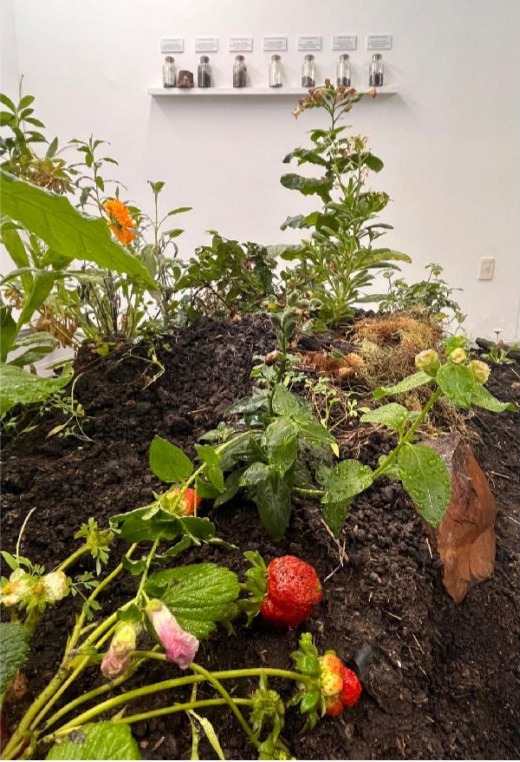
Con las tierras que los mantuvo escondidos durante medio siglo, la artista crea dispositivos de activación de la memoria a través de diferentes técnicas artísticas, que van desde la creación de huellas con fotografía experimental hasta la plantación en salas de museo.
Entendiendo a la tierra como archivo de la memoria, se propone la obra desde el concepto agroecológico de compostaje para transformar el terror de los enterramientos clandestinos realizados por militares, en transformación vital, en obras pictóricas e instalaciones de arte contemporáneo.
Hacer arte podría estar vinculado a transplantar, a traducir, a interpretar, a encarnar, a la implantación ontológica, a traer a la realidad algo nuevo: un proyecto artístico como un laboratorio donde las disciplinas se interconectan. Si bien el arte no redime a través de la experiencia estética, recordar es una acción vital, como lo es plantar.
Proyecto declarado de interés ministerial por el Ministerio de Educación y Cultura de Uruguay.
Ganador del premio Fondos Concursables para la Cultura 2024, Artes Visuales.
Manuela Aldabe trabaja en este proyecto desde 2019, en un proceso de seis años le fueron entregadas las tierras de las fosas de todos los desaparecidos hallados por el Grupo de Antropología Forense de Uruguay.
En Uruguay son 197 víctimas detenidas desaparecidas, según la organización Madres y Familiares de uruguayos Detenidos Desaparecidos, de las cuales hasta ahora han sido halladas solo 7, el proyecto cuenta con tierra de todos los hallazgos. Los hallazgos se realizaron en predios militares.
Las tierras fueron entregadas a Manuela Aldabe por el Grupo de Investigación en Antropología Forense (GIAF) a través de la Institución Nacional de Derechos Humanos (INDDHH), responsable de las búsquedas antropológicas, con los permisos del fiscal especializado en delitos de lesa humanidad, Dr. Ricardo Perciballe y de la jueza Dra. Tórtora, con el apoyo de la Red Nacional de Sitios de la Memoria.
Este proyecto propone el concepto de memoria como fuente histórico social, sin sembrar terror. El arte aquí se convierte en una llave para abordar el trauma social en un plano simbólico. El arte aquí se plantea como un espacio de resistencia, de libertad.
Her eyes were blue
"Love is a serious thing. A practice for the flesh, a responsibility for the heart." Eduardo Bleier Horovitz
My gratitude to : the families of Bleier, Castro and Blanco. To the National Institute of Human Rights. To the Honorary Commission of Sites for Memory. To the forensic investigation team. To the Human Rights Prosecutor's Office. To Luis Aldabe and Zenia Toribio. To Emilio Toribio and Olira Viñas, in my memory and heart forever. Work exhibited at the EAC from 10 December 2020 in the 59th National Visual Arts Salon.
Work selected for the Salón Nacional de Artes Visuales 2020.


Ver más Her eyes were blue
Infinite Garden
Handcrafted photography on wood, made without a camera, with the old cyanotype technique, intervened with oil.
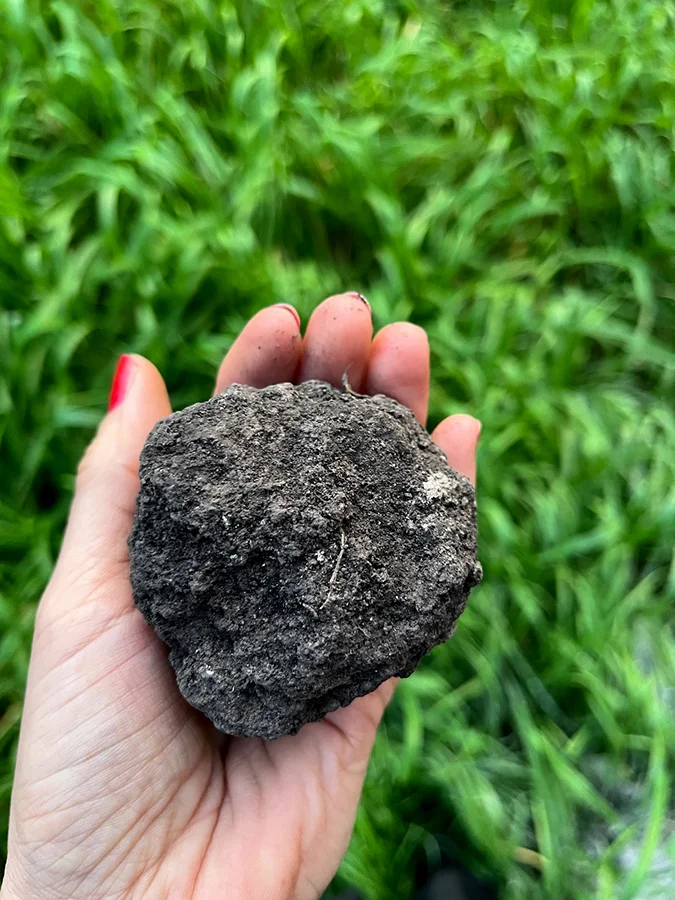
The spiral is formed by direct contact between the lands of the three graves of missing victims of State terrorism: Eduardo Bleier Horovitz , Julio Castro and Ricardo Blanco. These are the lands of the sites where her bone remains were found during anthropological excavations, given to the artist by the Human Rights Institution of Uruguay.
Butia Palm (Butia capitata), Anacaguita (Cordia boissieri), Chilca (Baccharis latifolia), Plumerillo ( Calliandra tweediei), Mburucuya (Passiflora caerulea), Canelón (Myrsine laetevirens), Cow's hoof (Bauhinia forficata), Ceibo flowers (Erythrina crista-galli), old man's beard (Tillandsia usneoides), Yucca (yucca elephantipes), Viznaga ( Ammi visnaga L.).
Art work acquisition Cabildo Montevideo.
Cyanotype on wood intervened with oil
91,5 x 1,81 cm

Blue Planet
Interpelo a las tierras que contuvieron escondidos los huesos de tres víctimas de terrorismo de Estado durante la última dictadura militar en Uruguay. Con las tierras que escondieron sus cuerpos durante más de tres décadas, siembro un jardín en el Museo de la Memoria de Montevideo. Con una técnica fotográfica antigua y manual, realizo cianotipos de gran escala. Busco la energía que quedó en la tierra, generando una serie de imagenes que son engranaje colectivo.
Eduardo Bleier Horovitz, a Jew, a communist, kidnapped in 1975, and a friend of my grandfather, was found in 2018. From then on I began to investigate the concept of land as a memory archive and after two years of bureaucratic and judicial requests, the The Human Rights Institution of Uruguay gave me land from Eduardo's grave, Julio Castro's grave and Ricardo Blanco's grave.
Blue Planet Blue Planet is the name of the garden that I plant in the Museum of Memory in Montevideo, a site specific, an artistic laboratory in a place of memory, a garden that is proposed as a space for active contemplation, where we can sit and watch, plant, feel the embrace of the flowers that they could not cut.
Each plant that is integrated is a collective performative act, each one contains a land of those lands, which are an archive. Relatives of victims, human rights defenders, girls and boys from schools and the neighborhood, bring their plant, perform their ritual. I take care of each plant, I make a herbarium. With those flowers, leaves, earth, I create images by direct contact between the photographic emulsion and the botanical objects, creating traces.
Usando una de las primeras técnicas fotográficas, la cianotipia, sin cámara y por contacto directo, creo huellas de las tierras y su jardín. La cianotipia es una técnica del 1840, muy usada para la copia de planos en arquitectura e ingeniería, elijo esta técnica porque propongo la memoria como cimiento de nuestra sociedad. Las líneas generadas por los dibujos de luz de esas huellas botánicas se imponen con su belleza ante el olvido, esas líneas de la memoria cuyo origen son los tallos de las plantas crecidas en el jardín, sostienen nuestras libertades.
In Uruguay, this is the first space in homage to our found disappeared, remembering them planting flowers with the land of the excavations is to plant a future. They are proof of clandestine burials, this land kept them hidden but also spoke, and may still have a lot to say and it is necessary to ask them, with all possible languages. Although art does not ridicule through aesthetic experience, remembering is a vital action, as is planting.


Ver más Blue Planet
Wisteria, from the neverland
Wisteria, a symbol of beauty and humility, bow to the oak leaves, which sprout from this earth. Earth from the sites where three uruguaian desaparecidos were found: Eduardo Bleier Horovitz, Ricardo Blanco and Julio Castro. This art work was created using an old photographic technique, without a camera, putting in contact the symbolic objects and the sensitive photographic emulsion to the sunlight. Cyanotype is a cameral-ess photographcprinting process invented in 1842 by scientist and astronomer Sir John Hirschel, which produces a cyan- blue print when a chemistry-coated surface is exposed to sunlight.
Eduardo Bleier Horovitz, jew and communist, Julio Castro , teacher and journalist and Ricardo Blanco, syndicalist were found in military areas, by the forenze anthropology team. They were buried hidden for forty years.
The artist obtained the earth by the Human Right Institute Uruguay, and she also has the permission of Human Right Fiscal, and the Fiscal from each cause..
Cyanotype Painting Watercolors
Cotton Rag Paper
50 x 70 cm


Ver más Glicinas